Toshi

プラントエンジニアリング業務で役立つ情報を発信

2026/3/15
In the early stages of a plant construction project, one of the most frequent questions from management or clients is, "How much will it cost?" However, the accuracy of a cost estimate varies significantly depending on the project phase. To standardize these estimates, the AACE International (Association for the Advancement of Cost Engineering) provides a widely recognized classification system. In this article, we will explain the relationship between project phases and cost estimation accuracy based on the AACE classification. What is CAPEX? In plant engineering, CAPEX (Capital Expenditure) refers to the total funds required to design, procure, and construct a ...
2026/3/15
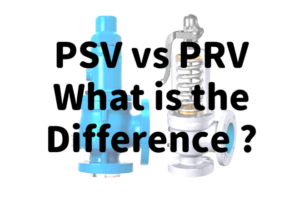
In this article, we will explain the differences between a Pressure Safety Valve (PSV) and a Pressure Relief Valve (PRV). Often, both are collectively referred to as "safety valves" because their fundamental purpose—releasing pressure from within a system—is the same. However, depending on the design philosophy of the manufacturer or engineering company, they are sometimes clearly distinguished. In such cases, they may even be assigned different symbols or tag numbers on a P&ID (Piping and Instrumentation Diagram). When they are distinguished, the difference lies primarily in their installation purpose and valve operation. From the next section onward, we will dive ...

2026/3/15
In this article, the concept of bonding in process piping is explained from the standpoint of static electricity control. Inside a pipeline, fluid is continuously flowing. Due to friction between the fluid and the pipe wall, electric charge is transferred, and the fluid becomes electrostatically charged (flow electrification). When a section of piping becomes electrically isolated—for example, by a flange gasket made of a non‑conductive material—the accumulated charge cannot dissipate and continues to build up. Under such conditions, a static discharge may occur from the piping, creating an ignition source. For plants handling flammable fluids, this phenomenon presents a credible ...
2026/3/15
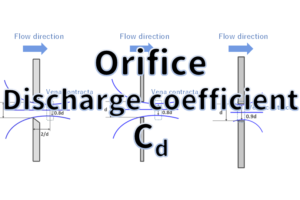
When calculating the flow rate of an orifice, the "Discharge Coefficient (Cd)" is a crucial factor. Did you know that the value of Cd changes significantly depending on the shape and thickness of the orifice plate? This article provides a technical explanation of the orifice flow coefficient and its dependence on orifice geometry. Orifice flow calculations are routinely employed in the design of restriction orifices and in flow measurement using orifice plates. In many such calculations the flow coefficient appears as a necessary parameter. This document explains the origin of the flow coefficient and how to allocate its components according ...
© 2026 プラントエンジニアのおどりば Powered by AFFINGER5